
Search Chicago Arrest Records
Chicago arrest records are held by the Chicago Police Department and the Cook County Sheriff's Office. As the third largest city in the country, Chicago processes tens of thousands of arrests each year across 22 patrol districts. These records are public under the Illinois Freedom of Information Act (5 ILCS 140/1) and can be accessed through in-person requests, FOIA filings, and online search tools.
Chicago Quick Facts
Chicago Police Department
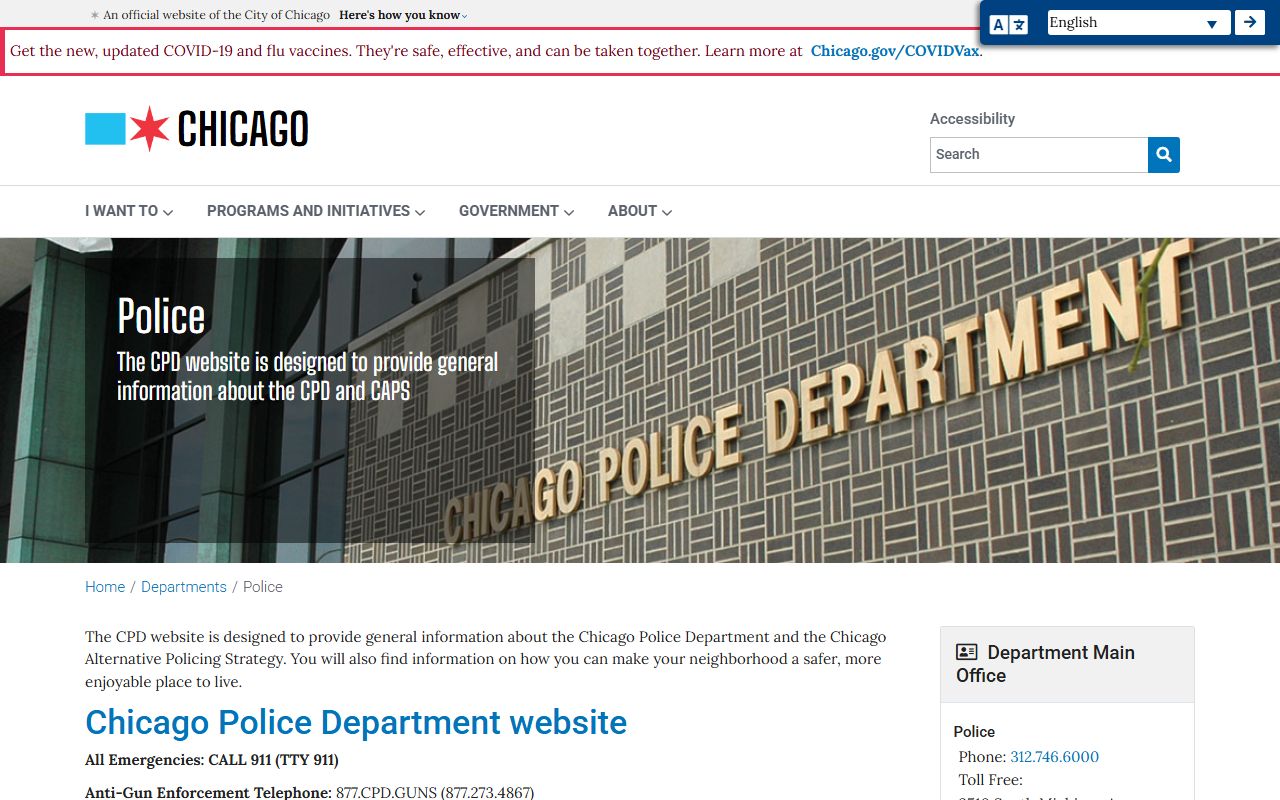
The Chicago Police Department is one of the largest law enforcement agencies in the country. CPD headquarters sits at 3510 S. Michigan Ave., Chicago, IL 60653. Call (312) 745-5508 for general questions. The department handles all arrest records for incidents within Chicago city limits. These records are kept separate from what Cook County tracks for suburban areas.
Chicago is split into 22 police districts. Each has its own station house. When an arrest happens, the report goes into CPD's central system. The district station keeps a copy too. But all formal records requests go through headquarters. CPD uses its own case numbering system. Having a case number or RD number speeds things up.
For arrest records, CPD offers a Criminal History Sheet, also called a "RAP sheet." This lists a person's arrest history as held by the department. It is not the same as the statewide criminal history kept by the Illinois State Police. The Chicago RAP sheet only covers Chicago arrests.
How to Search Chicago Arrest Records
There are a few ways to look up arrest records in Chicago. The most direct route is the CPD RAP sheet. You can also use Cook County's online tools or go through the state system.
To get a CPD RAP sheet, go to CPD Headquarters at the Public Access Info Room on the 1st Floor, Window #1. Hours are Monday through Friday, 8:30 a.m. to 12:00 p.m. The fee is $16.00. Pay by cash, check, or money order. Call (312) 745-5644 with questions about this process. You need a valid photo ID. The sheet shows all Chicago arrests on file for that person.
The Cook County Sheriff runs an online inmate search that shows current detainees and recent bookings. This covers the Cook County Jail, which holds people arrested anywhere in Cook County, including Chicago. Search by name to see charges, bond info, and court dates. This tool is free. It works around the clock.
At the state level, the Illinois State Police CHIRP system lets you run a name-based criminal history search. It pulls from the statewide database and may show Chicago arrests along with records from other parts of Illinois. The Bureau of Identification manages this system.
FOIA Process for Chicago Arrest Records
The Illinois FOIA gives anyone the right to ask for public records from government agencies. That includes arrest records from CPD. Under 5 ILCS 140/2.15, certain arrest data must be made public within 72 hours of an arrest. This covers the arrested person's name, charges, and the agency that made the arrest.
To file a FOIA request with CPD, put your request in writing. Be clear about what you need. Include names, dates, and case numbers if you have them. CPD has five business days to respond. They can take a five-day extension if the request is complex. The first 50 pages are free in most cases. After that, there may be per-page copying fees.
You can also file a FOIA request with the Cook County Sheriff's Office if the arrest involved county law enforcement. The sheriff's FOIA office handles jail booking records on a separate track from CPD. Both agencies respond to written FOIA requests on their own timelines.
What Chicago Arrest Records Contain
A Chicago arrest record typically includes the full name of the person arrested, their date of birth, and a physical description. It lists the charges filed, the arresting officer, and the date, time, and location of the arrest. Booking data adds a booking number, mugshot, and intake details from the Cook County Jail.
Court records tied to Chicago arrests show case numbers, hearing dates, and case outcomes. If charges were dropped or a not guilty verdict came back, that shows in the court file. The Uniform Conviction Information Act (20 ILCS 2635/1) governs how conviction data is shared at the state level. Records that have been sealed or expunged under Illinois law are not available to the public.
CPD also has a specific process for people seeking their own records for expungement. As the department notes, getting a copy of your Chicago Police Department Criminal History Sheet is the first step toward expungement. Adults arrested at age 17 and above follow the standard RAP sheet process. For juvenile arrests at age 16 and under, contact the Youth Division at (312) 745-6004. The arrest authority for all officers in Chicago comes from 725 ILCS 5/107-2, which defines when an officer can make an arrest with or without a warrant.

Cook County Connection
Chicago sits entirely within Cook County. The county plays a big role in how arrest records move through the system. After CPD makes an arrest, the case typically goes to Cook County Circuit Court for prosecution. The county jail, run by the Cook County Sheriff, houses detainees who are waiting for trial or sentencing.
The Cook County Clerk of the Circuit Court keeps all court case records. You can look up criminal cases through their online case information system. The Cook County State's Attorney decides which charges to pursue. The public defender's office represents those who can't afford an attorney. All of these offices produce records that tie back to the original Chicago arrest.
More Chicago Arrest Records Resources
The City of Chicago police portal has general information about services and how to reach the department. The ISP fee schedule lists current costs for state-level criminal history checks. Fingerprint-based searches through approved vendors provide a more thorough option when a name-based search is not enough.
The Chicago courts portal is another resource for looking up case information tied to Chicago arrest records. Between CPD, Cook County, and the state system, there are several paths to the same data. The best one depends on what kind of record you need and how far back it goes.
Nearby Cities
Several cities near Chicago also keep their own arrest records through local police departments: